

range Note 1)Power supply voltageCurrent consumptionPower supply voltage for sensorPower supply current for sensor Note 3)Sensor input--Output Note 4)specificationsHysteresisResponse time Note 5)Linearity Note 5)Repeatability Note 5)Temperature characteristicsDisplay methodStatus LED?
range Note 1)Power supply voltageCurrent consumptionPower supply voltage for sensorPower supply current for sensor Note 3)Sensor input--Output Note 4)specificationsHysteresisResponse time Note 5)Linearity Note 5)Repeatability Note 5)Temperature characteristicsDisplay methodStatus LED?
range Note 1)Power supply voltageCurrent consumptionPower supply voltage for sensorPower supply current for sensor Note 3)Sensor input--Output Note 4)specificationsHysteresisResponse time Note 5)Linearity Note 5)Repeatability Note 5)Temperature characteristicsDisplay methodStatus LED?
range Note 1)Power supply voltageCurrent consumptionPower supply voltage for sensorPower supply current for sensor Note 3)Sensor input--Output Note 4)specificationsHysteresisResponse time Note 5)Linearity Note 5)Repeatability Note 5)Temperature characteristicsDisplay methodStatus LED?
range Note 1)Power supply voltageCurrent consumptionPower supply voltage for sensorPower supply current for sensor Note 3)Sensor input--Output Note 4)specificationsHysteresisResponse time Note 5)Linearity Note 5)Repeatability Note 5)Temperature characteristicsDisplay methodStatus LED?
range Note 1)Power supply voltageCurrent consumptionPower supply voltage for sensorPower supply current for sensor Note 3)Sensor input--Output Note 4)specificationsHysteresisResponse time Note 5)Linearity Note 5)Repeatability Note 5)Temperature characteristicsDisplay methodStatus LED?
range Note 1)Power supply voltageCurrent consumptionPower supply voltage for sensorPower supply current for sensor Note 3)Sensor input--Output Note 4)specificationsHysteresisResponse time Note 5)Linearity Note 5)Repeatability Note 5)Temperature characteristicsDisplay methodStatus LED?
range Note 1)Power supply voltageCurrent consumptionPower supply voltage for sensorPower supply current for sensor Note 3)Sensor input--Output Note 4)specificationsHysteresisResponse time Note 5)Linearity Note 5)Repeatability Note 5)Temperature characteristicsDisplay methodStatus LED?
25 to 85C (with no freezing and condensation)1000 VAC for 1 min. between external terminal and case50M or more (500 VDC Mega) between external terminal and case10 to 500 Hz with a 1.5 mm amplitude or 98 m/s2 acceleration, whichever is smaller.490 m/s2 in X, Y, Z directions 3 times each1000 Vp-p, Pulse width 1?s, Rise time 1ns660 g3/8, 1/2
25 to 85C (with no freezing and condensation)1000 VAC for 1 min. between external terminal and case50M or more (500 VDC Mega) between external terminal and case10 to 500 Hz with a 1.5 mm amplitude or 98 m/s2 acceleration, whichever is smaller.490 m/s2 in X, Y, Z directions 3 times each1000 Vp-p, Pulse width 1?s, Rise time 1ns660 g3/8, 1/2
25 to 85C (with no freezing and condensation)1000 VAC for 1 min. between external terminal and case50M or more (500 VDC Mega) between external terminal and case10 to 500 Hz with a 1.5 mm amplitude or 98 m/s2 acceleration, whichever is smaller.490 m/s2 in X, Y, Z directions 3 times each1000 Vp-p, Pulse width 1?s, Rise time 1ns660 g3/8, 1/2
25 to 85C (with no freezing and condensation)1000 VAC for 1 min. between external terminal and case50M or more (500 VDC Mega) between external terminal and case10 to 500 Hz with a 1.5 mm amplitude or 98 m/s2 acceleration, whichever is smaller.490 m/s2 in X, Y, Z directions 3 times each1000 Vp-p, Pulse width 1?s, Rise time 1ns660 g3/8, 1/2
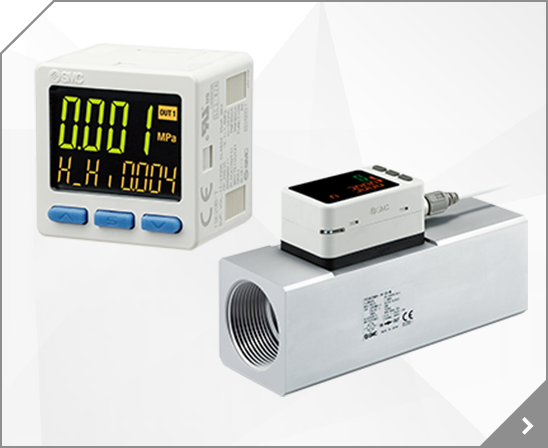
Switching from real-time flow rate to accumulated flow is possible.Digital flow switch for high temperature fluids , Remote type display unit , Temperature range: 0 to 90C , Flow rate range: 0.5-4(l/min) ~ 5-40(l/min) , Output for display unit with or w/o analog output , Port sizes: 3/8, 1/2, 3/4, DIGITAL FLOW SW, REMOTE SENSOR, INSTRUMENTATION, IFW/PFW FLOW SWITCH, FA, IFW/PFW 1/2INCH
Switching from real-time flow rate to accumulated flow is possible.Digital flow switch for high temperature fluids , Remote type display unit , Temperature range: 0 to 90C , Flow rate range: 0.5-4(l/min) ~ 5-40(l/min) , Output for display unit with or w/o analog output , Port sizes: 3/8, 1/2, 3/4, DIGITAL FLOW SW, REMOTE SENSOR, INSTRUMENTATION, IFW/PFW FLOW SWITCH, FA, IFW/PFW 1/2INCH
Switching from real-time flow rate to accumulated flow is possible.Digital flow switch for high temperature fluids , Remote type display unit , Temperature range: 0 to 90C , Flow rate range: 0.5-4(l/min) ~ 5-40(l/min) , Output for display unit with or w/o analog output , Port sizes: 3/8, 1/2, 3/4, DIGITAL FLOW SW, REMOTE SENSOR, INSTRUMENTATION, IFW/PFW FLOW SWITCH, FA, IFW/PFW 1/2INCH
Switching from real-time flow rate to accumulated flow is possible.Digital flow switch for high temperature fluids , Remote type display unit , Temperature range: 0 to 90C , Flow rate range: 0.5-4(l/min) ~ 5-40(l/min) , Output for display unit with or w/o analog output , Port sizes: 3/8, 1/2, 3/4, DIGITAL FLOW SW, REMOTE SENSOR, INSTRUMENTATION, IFW/PFW FLOW SWITCH, FA, IFW/PFW 1/2INCH
Switching from real-time flow rate to accumulated flow is possible.Digital flow switch for high temperature fluids , Remote type display unit , Temperature range: 0 to 90C , Flow rate range: 0.5-4(l/min) ~ 5-40(l/min) , Output for display unit with or w/o analog output , Port sizes: 3/8, 1/2, 3/4, DIGITAL FLOW SW, REMOTE SENSOR, INSTRUMENTATION, IFW/PFW FLOW SWITCH, FB, IFW/PFW 1/2INCH
range Note 1)Power supply voltageCurrent consumptionPower supply voltage for sensorPower supply current for sensor Note 3)Sensor input--Output Note 4)specificationsHysteresisResponse time Note 5)Linearity Note 5)Repeatability Note 5)Temperature characteristicsDisplay methodStatus LED?
range Note 1)Power supply voltageCurrent consumptionPower supply voltage for sensorPower supply current for sensor Note 3)Sensor input--Output Note 4)specificationsHysteresisResponse time Note 5)Linearity Note 5)Repeatability Note 5)Temperature characteristicsDisplay methodStatus LED?
range Note 1)Power supply voltageCurrent consumptionPower supply voltage for sensorPower supply current for sensor Note 3)Sensor input--Output Note 4)specificationsHysteresisResponse time Note 5)Linearity Note 5)Repeatability Note 5)Temperature characteristicsDisplay methodStatus LED?