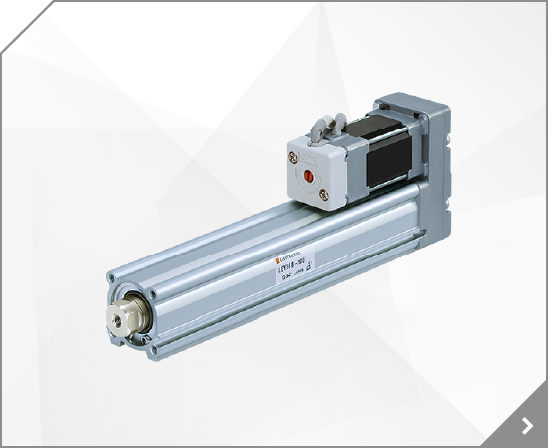


A rodless cylinder with mechanical joining differs from a basic air cylinder in that no piston rod extends outside the cylinder body. Instead, the internal piston is connected to an external carriage.
A rodless cylinder with mechanical joining differs from a basic air cylinder in that no piston rod extends outside the cylinder body. Instead, the internal piston is connected to an external carriage.
A rodless cylinder with mechanical joining differs from a basic air cylinder in that no piston rod extends outside the cylinder body. Instead, the internal piston is connected to an external carriage.
A rodless cylinder with mechanical joining differs from a basic air cylinder in that no piston rod extends outside the cylinder body. Instead, the internal piston is connected to an external carriage.
A rodless cylinder with mechanical joining differs from a basic air cylinder in that no piston rod extends outside the cylinder body. Instead, the internal piston is connected to an external carriage.
A rodless cylinder with mechanical joining differs from a basic air cylinder in that no piston rod extends outside the cylinder body. Instead, the internal piston is connected to an external carriage.
A rodless cylinder with mechanical joining differs from a basic air cylinder in that no piston rod extends outside the cylinder body. Instead, the internal piston is connected to an external carriage.
A rodless cylinder with mechanical joining differs from a basic air cylinder in that no piston rod extends outside the cylinder body. Instead, the internal piston is connected to an external carriage.
A rodless cylinder with mechanical joining differs from a basic air cylinder in that no piston rod extends outside the cylinder body. Instead, the internal piston is connected to an external carriage.
A rodless cylinder with mechanical joining differs from a basic air cylinder in that no piston rod extends outside the cylinder body. Instead, the internal piston is connected to an external carriage.
A rodless cylinder with mechanical joining differs from a basic air cylinder in that no piston rod extends outside the cylinder body. Instead, the internal piston is connected to an external carriage.
A rodless cylinder with mechanical joining differs from a basic air cylinder in that no piston rod extends outside the cylinder body. Instead, the internal piston is connected to an external carriage.
A rodless cylinder with mechanical joining differs from a basic air cylinder in that no piston rod extends outside the cylinder body. Instead, the internal piston is connected to an external carriage.
A rodless cylinder with mechanical joining differs from a basic air cylinder in that no piston rod extends outside the cylinder body. Instead, the internal piston is connected to an external carriage.
A rodless cylinder with mechanical joining differs from a basic air cylinder in that no piston rod extends outside the cylinder body. Instead, the internal piston is connected to an external carriage.
A rodless cylinder with mechanical joining differs from a basic air cylinder in that no piston rod extends outside the cylinder body. Instead, the internal piston is connected to an external carriage.
A rodless cylinder with mechanical joining differs from a basic air cylinder in that no piston rod extends outside the cylinder body. Instead, the internal piston is connected to an external carriage.
Rectangular multi-connector series KDM has substantial reduction in mounting space in comparison with a model requiring many union joints for panels and partitions, this model needs only a small space. KDM is suitable for use with positive pressure and vacuum. It is possible to create a multi-connector with mixed tube sizes.
Where space is at a premium, you can select a female rod end (up to 29mm shorter) and/or boss-cut type (up to 16mm shorter). Rubber bumpers are standard. The CM2-Z series offers a variety of mounting options.
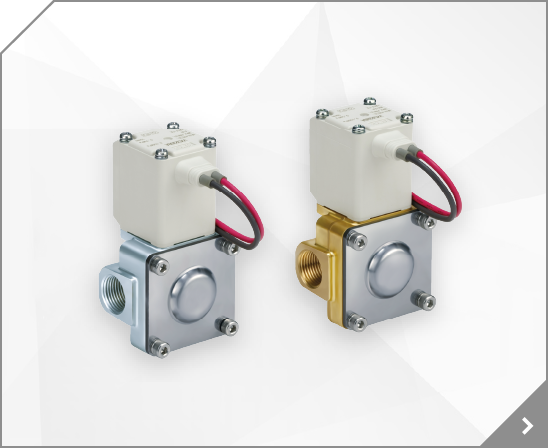
The VXZ series is a 2 port, pilot operated solenoid valve capable of operating at a higher differential pressure by maintaing a zero-pressure differential on the valve seat. It is compatible with wide range of fluid. Flow rate ranges from Cv of 1.7 to 10.2.