

Magnet: D (Built-in), Series: 85 (Standard), Head Cover Type: N (Basic Integrated Clevis), Bore Size: 10mm, Stroke: 80mm, Cushion: Rubber Cushion, Rod Boot: None, Mounting Bracket: None, Accessory: None, Auto Switch Mounting Type: B (Band), Auto Switch: M9B--Solid State, Gen. Purpose, 2 Wire, Horizontal, Lead Wire or Prewired Connector: L (3m)
Mounting: L (Foot), Bore Size: 63mm, Thread: Rc, Full Stroke: 125mm, First Stroke: 80mm, Auto Switch: M9BW--Solid State, 2-color Indication, 2 Wire, Horizontal, Lead Wire or Prewired Connector: SDPC (0.5m Cord Length, M12-4 Pin Connector)
Mounting: L (Foot), Bore Size: 63mm, Thread: Rc, Full Stroke: 125mm, First Stroke: 80mm, Auto Switch: M9BW--Solid State, 2-color Indication, 2 Wire, Horizontal, Lead Wire or Prewired Connector: SDPC (0.5m Cord Length, M12-4 Pin Connector), Number: 3 pcs.
Magnet: D (Built-in), Series: 85K (Non-rotating), Head Cover Type: E (Double End), Bore Size: 10mm, Stroke: 80mm, Mounting Bracket: None, Accessory: None, Auto Switch Mounting Type: B (Band), Auto Switch: M9P--Solid State, Gen. Purpose, 3 Wire PNP, Horizontal, Lead Wire or Prewired Connector: Z (5m)
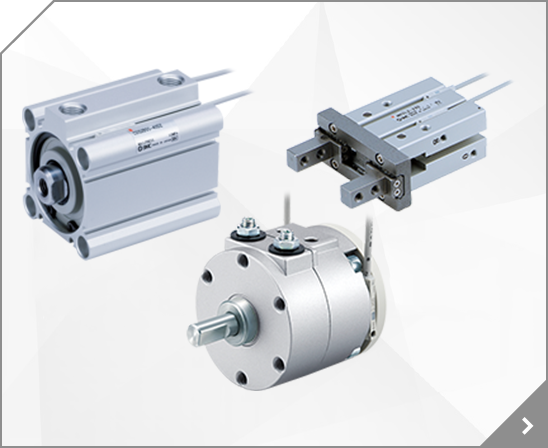
The C85 series conforms to ISO 6432 and CETOP RP52P. The C85 is available in bore sizes 8mm through 25mm with standard strokes ranging from 10mm through 300mm. A unique rod packing design prevents entry of dust and the effectiveness of the seal is such that the C85 is suitable for use in extremely dusty environments. With abrasion resistant packings and replaceable nose seals, the C85
Magnet: D (Built-in), Series: 85 (Standard), Head Cover Type: E (Double End), Bore Size: 16mm, Stroke: 80mm, Cushion: Rubber Cushion, Rod Boot: None, Mounting Bracket: None, Accessory: None, Auto Switch Mounting Type: B (Band), Auto Switch: A96--Reed, DC Volt, LED, Horizontal, Lead Wire or Prewired Connector: L (3m)
ProfiNet Direct Connect, ELECTRIC ACTUATOR CONTROLLER, 0.13 lb
Series LECP6 controller has two available modes for the setting software and teaching box.? In the easy mode, the operation can be started by only setting the speed, position, etc.? Using the normal mode allows a further detailed setup.??A few of the?main functions of the LECP6 controller are actuator control, specified force operation, separated power supply, and returning the actuator
Note 5)Finger backlash/ both sides [mm] Note 6)Impact/Vibration resistance [m/s2] Note 7)Max. operating frequency [C.P.M]Operating temperature range [C]Operating humidity range [%RH]Weight [g]Motor sizeMotor typeEncoderRated voltage [V]Power consumption/ Standby power consumption when operating [W] Note 8)Max. instantaneous power consumption [W] Note 9)BasicCompactLEHZ1046 to 142 to 65 to 80
Note 5)Finger backlash/ both sides [mm] Note 6)Impact/Vibration resistance [m/s2] Note 7)Max. operating frequency [C.P.M]Operating temperature range [C]Operating humidity range [%RH]Weight [g]Motor sizeMotor typeEncoderRated voltage [V]Power consumption/ Standby power consumption when operating [W] Note 8)Max. instantaneous power consumption [W] Note 9)BasicCompactLEHZ1666 to 143 to 85 to 80
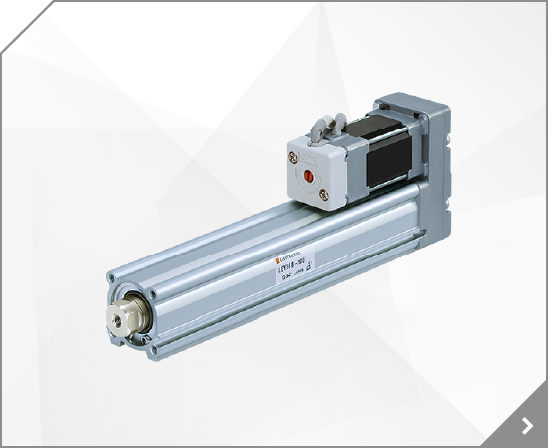
This is a legacy product. Please contact us for the latest version.sales@ocaire.com, 16MM LE ELECTRIC ACTUATOR, ACTUATOR, ELECTRIC ACTUATOR, GC, 16MM LE ELECTRIC ACTUATOR, 2.20462 lb, ModelBoltMax. tightening torque (N m)L (mm)LESH16R/LM5 x 0.8335.5
LECP1 series is a programless controller capable of setting up an electric actuator operation without using a PC or teaching box. Through the combination of parallel I/O inputs, 14 points of positioning are available. The speed and acceleration of the positioning can be set by the switch for each operating direction. A single signal sent to a dedicated terminal returns an actuator to
LECP1 series is a programless controller capable of setting up an electric actuator operation without using a PC or teaching box. Through the combination of parallel I/O inputs, 14 points of positioning are available. The speed and acceleration of the positioning can be set by the switch for each operating direction. A single signal sent to a dedicated terminal returns an actuator to
LECP1 series is a programless controller capable of setting up an electric actuator operation without using a PC or teaching box. Through the combination of parallel I/O inputs, 14 points of positioning are available. The speed and acceleration of the positioning can be set by the switch for each operating direction. A single signal sent to a dedicated terminal returns an actuator to
LECP1 series is a programless controller capable of setting up an electric actuator operation without using a PC or teaching box. Through the combination of parallel I/O inputs, 14 points of positioning are available. The speed and acceleration of the positioning can be set by the switch for each operating direction. A single signal sent to a dedicated terminal returns an actuator to
LECP1 series is a programless controller capable of setting up an electric actuator operation without using a PC or teaching box. Through the combination of parallel I/O inputs, 14 points of positioning are available. The speed and acceleration of the positioning can be set by the switch for each operating direction. A single signal sent to a dedicated terminal returns an actuator to
LECP1 series is a programless controller capable of setting up an electric actuator operation without using a PC or teaching box.? Through the combination of parallel I/O inputs, 14 points of positioning are available.? The speed and acceleration of the positioning can be set by the switch for each operating direction.? A single signal sent to a dedicated terminal returns an actuator to
LECP1 series is a programless controller capable of setting up an electric actuator operation without using a PC or teaching box.? Through the combination of parallel I/O inputs, 14 points of positioning are available.? The speed and acceleration of the positioning can be set by the switch for each operating direction.? A single signal sent to a dedicated terminal returns an actuator to
LECP1 series is a programless controller capable of setting up an electric actuator operation without using a PC or teaching box.? Through the combination of parallel I/O inputs, 14 points of positioning are available.? The speed and acceleration of the positioning can be set by the switch for each operating direction.? A single signal sent to a dedicated terminal returns an actuator to