

8)2 to 10 stations: W = 47n + 15611 to 20 stations: W = 47n + 190
8)2 to 10 stations: W = 47n + 15611 to 20 stations: W = 47n + 190
8)2 to 10 stations: W = 47n + 15611 to 20 stations: W = 47n + 190
8)2 to 10 stations: W = 47n + 15611 to 20 stations: W = 47n + 190
8)2 to 10 stations: W = 47n + 15611 to 20 stations: W = 47n + 190
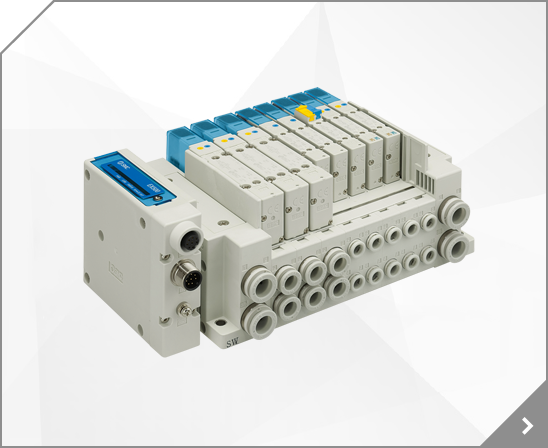
The SY3000 and SY5000 have the same valve width as their predecessors, but the flow has been increased by up to 80%, allowing the valve size to be reduced. A built-in strainer in the pilot valve prevents trouble caused by foreign matter. By using H-NBR seal material for the main valve and seals, Ozone resistance has been improved.
The SY3000 and SY5000 have the same valve width as their predecessors, but the flow has been increased by up to 80%, allowing the valve size to be reduced. A built-in strainer in the pilot valve prevents trouble caused by foreign matter. By using H-NBR seal material for the main valve and seals, Ozone resistance has been improved.
The SY3000 and SY5000 have the same valve width as their predecessors, but the flow has been increased by up to 80%, allowing the valve size to be reduced. A built-in strainer in the pilot valve prevents trouble caused by foreign matter. By using H-NBR seal material for the main valve and seals, Ozone resistance has been improved.
The SY3000 and SY5000 have the same valve width as their predecessors, but the flow has been increased by up to 80%, allowing the valve size to be reduced. A built-in strainer in the pilot valve prevents trouble caused by foreign matter. By using H-NBR seal material for the main valve and seals, Ozone resistance has been improved.
The SY3000 and SY5000 have the same valve width as their predecessors, but the flow has been increased by up to 80%, allowing the valve size to be reduced. A built-in strainer in the pilot valve prevents trouble caused by foreign matter. By using H-NBR seal material for the main valve and seals, Ozone resistance has been improved.
The SY3000 and SY5000 have the same valve width as their predecessors, but the flow has been increased by up to 80%, allowing the valve size to be reduced. A built-in strainer in the pilot valve prevents trouble caused by foreign matter. By using H-NBR seal material for the main valve and seals, Ozone resistance has been improved.
8)2 to 10 stations: W = 47n + 15611 to 20 stations: W = 47n + 190
The SY3000 and SY5000 have the same valve width as their predecessors, but the flow has been increased by up to 80%, allowing the valve size to be reduced. A built-in strainer in the pilot valve prevents trouble caused by foreign matter. By using H-NBR seal material for the main valve and seals, Ozone resistance has been improved.
The SY3000 and SY5000 have the same valve width as their predecessors, but the flow has been increased by up to 80%, allowing the valve size to be reduced. A built-in strainer in the pilot valve prevents trouble caused by foreign matter. By using H-NBR seal material for the main valve and seals, Ozone resistance has been improved.
8)2 to 10 stations: W = 47n + 15611 to 20 stations: W = 47n + 190
8)2 to 10 stations: W = 47n + 15611 to 20 stations: W = 47n + 190
The SY3000 and SY5000 have the same valve width as their predecessors, but the flow has been increased by up to 80%, allowing the valve size to be reduced. A built-in strainer in the pilot valve prevents trouble caused by foreign matter. By using H-NBR seal material for the main valve and seals, Ozone resistance has been improved.
The SY3000 and SY5000 have the same valve width as their predecessors, but the flow has been increased by up to 80%, allowing the valve size to be reduced. A built-in strainer in the pilot valve prevents trouble caused by foreign matter. By using H-NBR seal material for the main valve and seals, Ozone resistance has been improved.
SMC high purity HYPER FITTING series LQ* responds to the latest demands in process control. From parts cleaning to assembly and packaging, all processes are controlled for cleanliness, and the use of new PFA virtually eliminates particle generation and TOC (total organic carbon) allowing confident use for the most demanding applications. If chemistries or flow requirements are changed during
SMC high purity HYPER FITTING series LQ* responds to the latest demands in process control. From parts cleaning to assembly and packaging, all processes are controlled for cleanliness, and the use of new PFA virtually eliminates particle generation and TOC (total organic carbon) allowing confident use for the most demanding applications. If chemistries or flow requirements are changed during