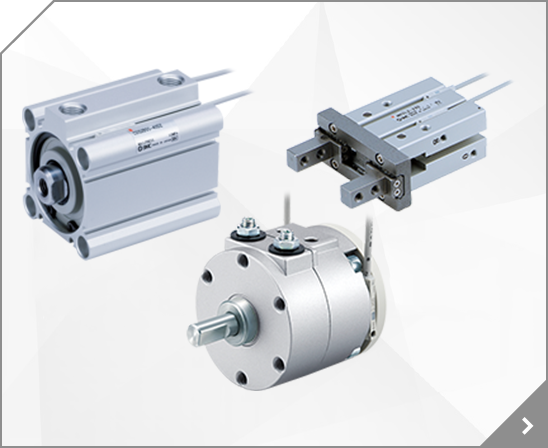
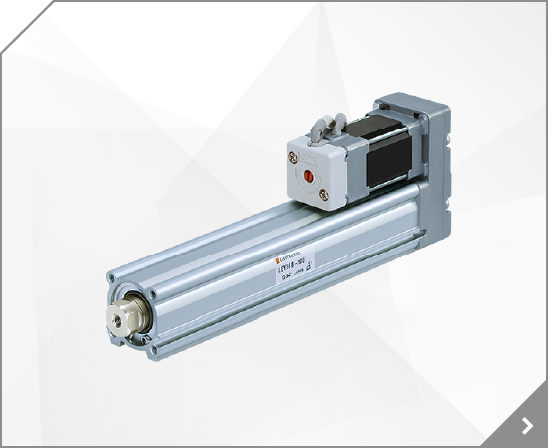
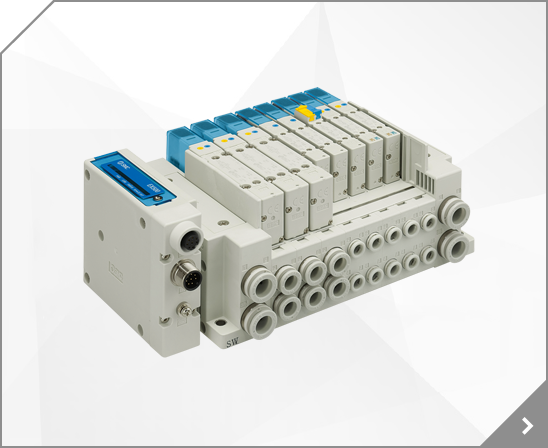
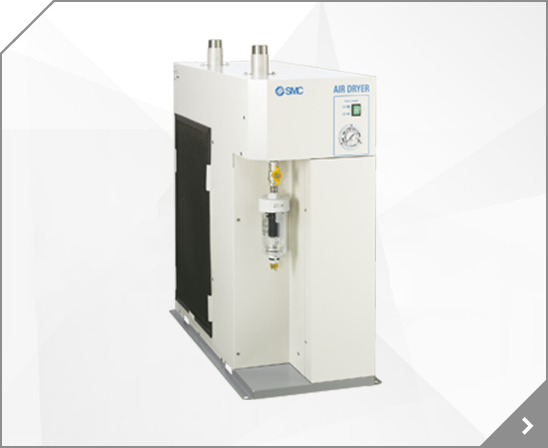


 Cylinder with Lock
 Do not turn the piston rod with the rod boot kept locked. When turning the piston rod, loosen the band once and do not twist the rod boot.
Do not drop or bump. Do not drop, bump or apply excessive impacts (300m/s or more for reed switches and 1000m/s or more for solid state switches) while handling. Although the body of the switch may not be damaged, the inside of the switch could be damaged and cause a malfunction. 2. Do not carry a cylinder by the auto switch lead wires. Never carry a cylinder by its lead wires.
Do not drop or bump. Do not drop, bump or apply excessive impacts (1000m/s or more for solid state switches) while handling. Although the body of the switch may not be damaged, the inside of the switch could be damaged and cause a malfunction. 2. Do not carry a cylinder by the auto switch lead wires. Never carry a cylinder by its lead wires.
Do not use in an environment with temperature cycles.
Do not drop or bump. Do not drop, bump or apply excessive impacts (1000m/s or more for solid state switches) while handling. Although the body of the switch may not be damaged, the inside of the switch could be damaged and cause a malfunction. 2. Do not carry a cylinder by the auto switch lead wires.
Do not touch the LCD indicator. Do not touch the LCD indicator face of the pressure switch during operation. Static electricity can change the readout. 3. Pressure port Do not introduce any wire or similar object to a pressure port as this may damage the pressure sensor and cause a malfunction. Warning 1. Do not use in an area where surges are generated.
Ltd. 1-16-4 Shimbashi, Minato-ku, Tokyo 105-8659, JAPAN Tel: 03-3502-2740 Fax: 03-3508-2480 URL http://www.smcworld.com 2002 SMC Corporation All Rights Reserved Specifications are subject to change without prior notice and any obligation on the part of the manufacturer.
Do not operate beyond the rated voltage range. If applying voltage over the rated voltage range, equipment may be damaged. 2. Avoid incorrect wiring such as polarity of power supply. Otherwise, equipment may be damaged. 3. Do not short circuit the load. (Do not connect to power supply.) Otherwise, equipment may be damaged.
Do not touch the LCD indicator. Do not touch the LCD indicator face of the pressure switch during operation. Static electricity can change the readout. 3. Pressure port Do not introduce wire, needles, or similar objects to the pressure port as this may damage the pressure sensor and cause malfunctions. Maintenance Caution Wiring 1.
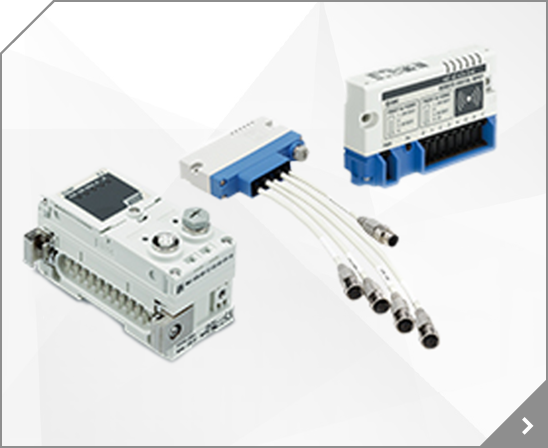
Before Use Fieldbus system EX500-S 03 Wiring Product Summary LED Display Select the specified branch cable below.
HEAD OFFICE: 1-16-4, SHIMBASHI, MINATO-KU, TOKYO 105, JAPAN TELEPHONE: 03-3502-2740 FACSIMILE: 03-3508-2480 ECC-PNAL-PRO-B Effective April 1999 Specifications are subject to change without notice.
Do not use a lubricator on the supply side of this product, as this can cause malfunction. When lubrication of terminal equipment is necessary, connect a lubricator on the output side of this equipment. 2. If electric power is shut off while pressure is being applied, pressure will be retained on the output side.
(Do not tighten with pliers.)
(Do not tighten with pliers.)
Do not drop or bump. Do not drop, bump, or apply excessive impacts (300 m/s2 or more for reed switches and 1000 m/s2 or more for solid state switches) while handling. Although the body of the switch may not be damaged, the inside of the switch could be damaged and cause a malfunction. 2. Do not carry a cylinder by the auto switch lead wires. Never carry a cylinder by its lead wires.
Do not drop or bump. Do not drop, bump, or apply excessive impacts (300 m/s2 or more for reed switches and 1000 m/s2 or more for solid state switches) while handling. Although the body of the switch may not be damaged, the inside of the switch could be damaged and cause a malfunction. 2. Do not carry a cylinder by the auto switch lead wires. Never carry a cylinder by its lead wires.
Do not drop or bump. Do not drop, bump, or apply excessive impacts (300 m/s2 or more for reed switches and 1000 m/s2 or more for solid state switches) while handling. Although the body of the switch may not be damaged, the inside of the switch could be damaged and cause a malfunction. 2. Do not carry a cylinder by the auto switch lead wires. Never carry a cylinder by its lead wires.
Do not drop or bump. Do not drop, bump, or apply excessive impacts (300 m/s2 or more for reed switches and 1000 m/s2 or more for solid state switches) while handling. Although the body of the switch may not be damaged, the inside of the switch could be damaged and cause a malfunction. 2. Do not carry a cylinder by the auto switch lead wires. Never carry a cylinder by its lead wires.
Do not use the drain tube in an upward direction. Do not bend or crush the drain tube. (Operation of auto drain will stop and water will flow out through the air outlet.) When tightening piping at the air inlet/outlet tube, the nozzle should be held firmly with a pipe wrench.
Do not use in these conditions. (Refer to specifications.) Consult SMC if a fluid other than compressed air is used. 2.